
Your Visit to Aura: How to Get the Most from Any Vet Appointment
A vet appointment works best when both sides come prepared. The more your vet knows about what you've observed at home, the better equipped they are to make an accurate assessment.
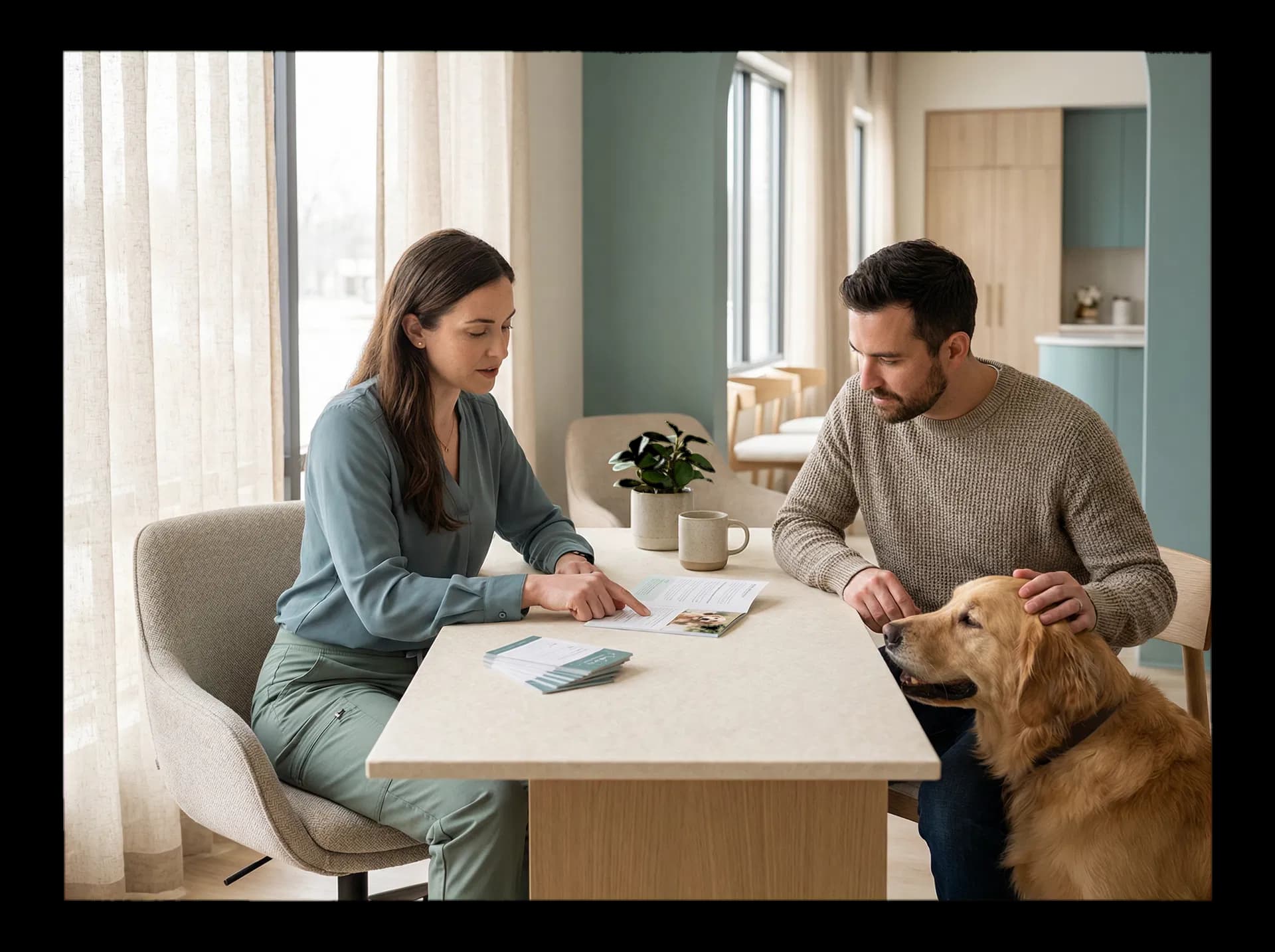
Prepared owners. Better outcomes.
This guide is designed for every pet family — whether you're coming to Aura for the first time, or preparing for any vet visit and want to make the most of it. No detail you've noticed at home is too small. The most accurate diagnoses start with the most complete histories.
01 — Before You Arrive
What to observe about your pet
History is one of the most valuable clinical tools available to a vet. Before your appointment, take 10 minutes to observe and note the following. The more specific your answers, the faster and more accurately your vet can assess your pet.
Eating & Drinking
- Has your pet's appetite changed? Eating more, less, or refusing food entirely?
- Any change in water intake? Drinking more than usual is a significant clinical flag.
- Any vomiting after meals? How soon after eating? How many times?
- Have you changed their food recently?
- Are they finishing their bowl, or leaving food behind?
Toileting & Bowel Movements
- Any diarrhoea? When did it start? Is there blood or mucus?
- Any constipation or straining?
- Changes in urination frequency or volume?
- Any accidents indoors for a previously house-trained pet?
- Has the colour or odour of urine changed?
Energy & Behaviour
- Is your pet less active or more lethargic than usual?
- Any changes in sleep pattern?
- Are they hiding more, or seeking more attention than normal?
- Any unusual aggression or fearfulness?
- Any confusion, disorientation, or unsteady movement?
Physical Observations
- Any limping, favouring a leg, or reluctance to jump or climb stairs?
- Any lumps, bumps, or swellings? Where are they? When did you first notice them?
- Any skin changes, redness, flaking, hair loss, or rashes?
- Any discharge from eyes, nose, or ears?
- Any coughing, sneezing, or laboured breathing?
- Any scooting, scratching at ears, or head shaking?
Mouth & Teeth
- Any bad breath? In cats, sweet or acetone breath can indicate serious illness.
- Difficulty chewing or dropping food from the mouth?
- Any drooling more than usual?
- Pawing at the mouth?
Weight & Body Condition
- Has your pet's weight changed recently? Are their ribs more visible or harder to feel?
- Does their abdomen look swollen or distended?
- Do they appear to have lost muscle mass?
Medication & History
- What medications or supplements is your pet currently on, including dose and frequency?
- Any previous diagnoses or procedures?
- Any known allergies?
- When were they last vaccinated?
- Are they on parasite prevention? Which product and when was the last dose?
02 — Questions to Ask
Questions to ask your vet
Appointments can feel rushed, and it's easy to forget what you wanted to ask. Write down your questions before you arrive. Select a visit type below to see the most useful questions to have ready.
- Is my pet at a healthy weight for their age and breed?
- Are there any early signs I should be monitoring?
- Is my pet's vaccination schedule up to date? Do I need to update the municipality registration?
- Are they on the right parasite prevention for their lifestyle and the current season?
- Is there anything about their diet I should consider changing?
- At what age should I be switching to a senior health protocol for my pet?
03 — During Your Visit
What to expect at the clinic
Our consultations are designed to give you time to be heard. Bring your notes, ask your questions, and tell us everything you've observed — no detail is too small. A change in your pet's water intake, a lump you're unsure about, a behaviour that's been bothering you: these are exactly the kinds of observations that shape an accurate diagnosis.
Low-stress handling is central to how we work. For anxious or reactive pets, we will always discuss and adapt our approach. If your pet has significant clinic anxiety, please let us know when you book — we can arrange a happy visit beforehand.
How Fear Free shapes every visit04 — After Your Visit
Leaving with a clear plan
You will leave with a clear summary of the consultation findings and a documented next-steps plan. If medications have been prescribed, our team will walk you through how to administer them. For post-surgical recovery, we will outline a full home care protocol.
Victory Visits
For pets who have had a procedure or a stressful experience, victory visits are available. These are brief, positive nurse-led sessions designed to end on a good note and build a lasting positive association with the clinic.
Ready to book your pet's visit?
Reach the DIP branch directly by phone, WhatsApp, or book online. Our team will confirm availability and get you scheduled.